
Tokyo’s Covid-19 Experience – What Happens Next?
Tokyo today is likely to join the rest of Japan in having the coronavirus “State of Emergency” lifted.
29th May 2020 • International

It’s been an unusual couple of months to say the least. Japan has not had a hard lockdown as seen in many countries around the world; schools are closed, the government advised residents to work from home where possible, and asked certain categories of businesses to close and others to restrict opening hours, but these requests were not legally enforceable.
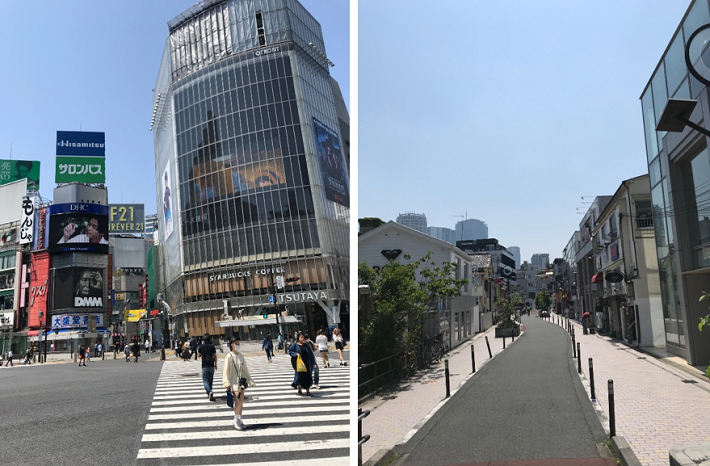
Despite this many retail chains decided to shutter their stores resulting in much of downtown Tokyo resembling a ghost-town. Here is the famous Shibuya Crossing and Cat St. Harajuku on Saturday May 2nd. I took these pictures while running in these areas which under normal circumstances would be completely unthinkable due to the crowds.
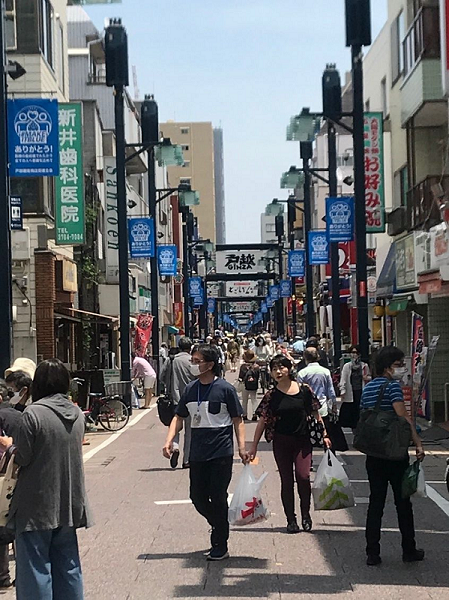
While the main urban hubs are spookily deserted more local shopping streets or shotengais have remained bustling hives of activity. Mobile application data supports this showing traffic levels have remained relatively high in these areas. This is Togoshi Ginza in Shinagawa-ward, at 1.3km in length famous for being the longest shopping street in Tokyo, this Monday lunchtime. Smaller chains and independent shops have remained open throughout helping to keep the local economies of these areas ticking over.
Despite the restrictions some brands have thrived: while sales at popular casual dining chains have plummeted due to restaurants being closed KFC Japan reported April sales 20% higher than in April 2019. Even McDonalds sales were up 6.5% for the same timeframe despite only being open for takeaway or delivery. KFC in Japan has a very strong takeaway offer, and this clearly positioned it well to weather the Covid-19 storm.
The question that everyone is asking is what happens now? How quick will the recovery be (and will it be V, U, W or L shaped?) Will the preference for shopping locally persist or will people flood back into central Tokyo to shop? Will the increased share of sales being made online reverse or endure? At least to some extent Japan seems to have overcome a resistance to working from home – if this persists what does it mean for retail in and around major business districts? In the casual dining sector will people continue to prefer using takeaway/delivery options rather than dining-in?
These issues generate all kinds of network planning challenges as old data and models become largely redundant. No-one can see the future but Geolytix are supporting our clients with flexible scenario modelling to tackle the questions above and support decisions at the network or individual store level as markets all around the world enter the recovery phase. Underpinning this is access to hyper-local mobility data which is helping us to understand changes in human activity, in close to real-time, in order to help businesses plan and be ready for any eventuality. See here for more information or please contact us to explore further.
Title Image: Thanks to Jezael Melgoza for sharing their work on Unsplash.

Related Posts
-

DOOH Retail : Geolytix et in-Store Media partenariat
Depuis janvier 2023, in-Store Media fait confiance à Geolytix pour la qualification des zones de chalandises des galeries commerciales et hypermarchés qu’il équipe en DOOH (affichage digital) afin d’améliorer le ciblage et la performance de ses campagnes.
Published 17th February 2024 • Tags international
-

DOOH Retail: Geolytix and in-Store Media partnership
Since January 2023, in-Store Media has trusted Geolytix to qualify the catchment areas of shopping malls and hypermarkets that it equips with DOOH (digital display) in order to improve the targeting and performance of its campaigns.
Published 17th February 2024 • Tags international
-

Retail in France post Covid
Stéphane takes a look at retail in France in a post-COVID world with a particular focus on Food, Beverage and Grocery.
Published 19th October 2023 • Tags international